

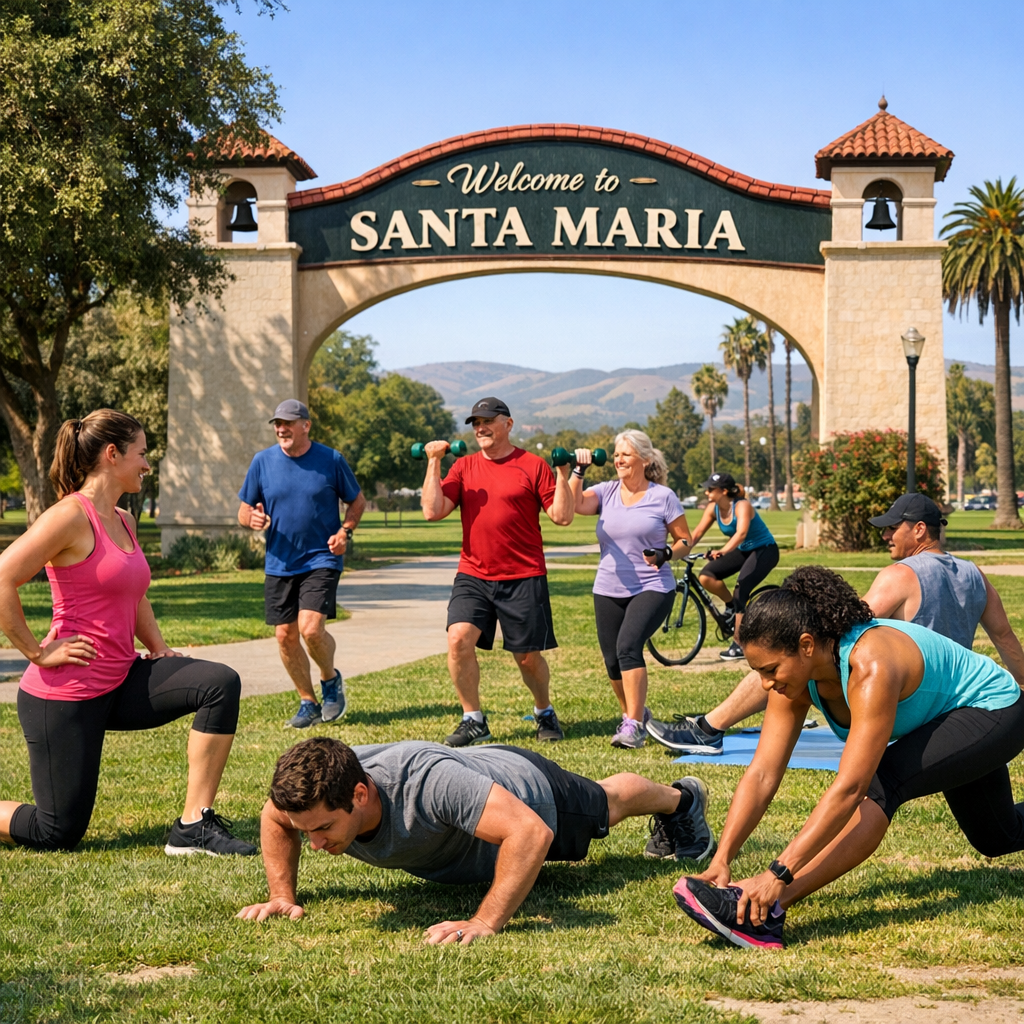
Wellness isn’t a luxury—it’s something we all deserve. In Santa Maria, there are numerous ways to invest in your physical fitness, mental health, and overall healthy living. Whether you’re just starting out, transitioning your routine, or strengthening your base, this guide gives you the tools and the local resources to feel more confident and supported.
Finding Your Fitness Rhythm
If you’re looking for gyms, classes, or outdoor activities, Santa Maria offers several options.
- Santa Maria Valley YMCA (3400 Skyway Dr) — Full range of gym amenities, pool, weight and cardio rooms, group exercise studios. Great for families or anyone wanting variety in one place. Hours are generous and mix early mornings to evening. (Accessible and community-focused.)
- City Recreation & Parks Programs — Across 31 neighborhood and community parks, including major centers like the Paul Nelson Aquatics Center and Elwin Mussell Senior Center, there are outreach classes like dance fitness, tai chi, aquatic workouts, and drop-in sports. Many are low- or no-cost for residents.
- Making Trails and Outdoor Time Count — Santa Maria’s parks and Los Flores Ranch Park give you space for walking, hiking, biking. Outdoor movement is free and dual-purpose: physical exercise and stress relief.
Nurturing Mental Health
Your mental wellness matters just as much as your physical health. Here are local resources that offer care, connection, and support.
- Transitions-Mental Health Association (TMHA) Wellness Center — Peer-run centers in Santa Maria provide a supportive space for recovery, wellness programming, and community connection. Joining is simple via a referral.
- Dignity Health Mental Health Clinic — Offers evaluations, therapy, psychiatry, coping skills training, and care for a broad range of mental health conditions. They tailor care to what works for you—whether that’s medication, therapy, or lifestyle-based approaches.
- Family Service Agency (FSA) — Individual, family, and couples counseling; mental health navigation to help you find the direction you need. Fees are adjusted based on income so services remain accessible.
- School and Youth Support — Student wellness centers at the high school level (e.g. SMJUHSD Wellness Services) connect young people to counseling and emotional support programs, while agencies like CALM focus on childhood trauma and family resilience.
Healthy Habits You Can Start Today
Small changes can lead to big improvements over time. Here are practical ideas to build into your daily life:
- Move intentionally: Aim for 30 minutes of walking, swimming, dancing, or other movement that feels good most days of the week.
- Eat local and seasonal: Make use of Blosser Urban Garden for fresh produce. Shopping at farmers’ markets or choosing locally grown fruits and vegetables adds nutrients and supports community food access.
- Prioritize mental rest: Use mindfulness, journaling or simple breathing exercises. Don’t ignore early warning signs like prolonged low mood or anxiety—seek help through clinics or peer support sooner rather than later.
- Stay socially connected: Join a group class at the YMCA, a walking meet-up, or Recreation & Parks activity. Social relationships are a cornerstone of wellness.
Tips for Sustainability
To turn new routines into lasting habits, keep these in mind:
- Start small: Picking one goal—say walking 15 minutes daily—can be more sustainable than trying to overhaul everything at once.
- Listen to your body: Rest when needed. Injuries or burnout set you back more than gentle consistency helps.
- Use resources around you: Community centers often offer sliding fees or scholarships. Mental health clinics may provide free or reduced-cost sessions.
- Make it social: Accountability from a friend or community group helps you stay motivated.
Wellness isn’t about perfection—it’s about balance and access. Santa Maria has many of the pieces you need: fitness facilities, committed mental health providers, rich green spaces, and community-centric programs. Whatever your starting point, there’s support here for you.